When it comes to protecting commercial buildings, not all doors are created equal. While a standard commercial door may provide privacy and basic access control, a security door is specifically engineered to resist forced entry, withstand heavy daily use, and help safeguard people, assets, and property.
Whether you’re responsible for an office, warehouse, retail store, school, healthcare facility, or industrial site, understanding the difference between a standard commercial door and a steel security door can help you make an informed decision about how to improve a building’s security.
What Is a Security Door?
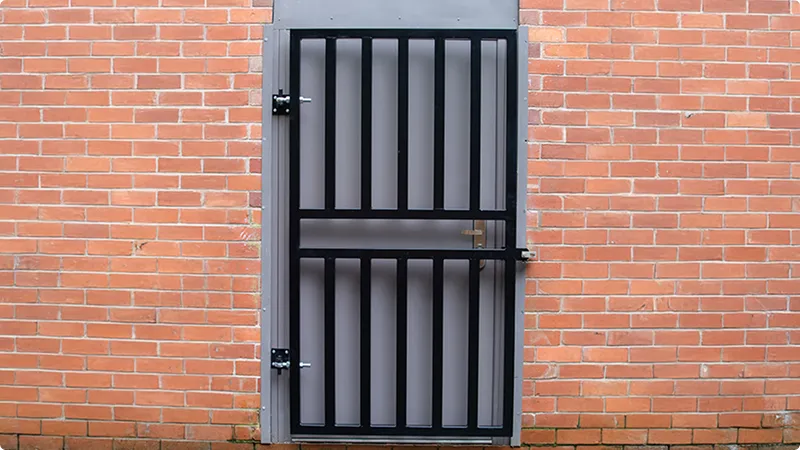
A security door is a reinforced door system designed to provide significantly greater protection against unauthorized access than a conventional commercial door. Unlike standard doors, steel security doors are manufactured using stronger materials, reinforced frames, heavy-duty hardware, and advanced locking systems that make them much more difficult to force open.
Rather than focusing solely on appearance or privacy, security doors are designed with durability, strength, and long-term performance in mind. Many doors and their individual parts (like the key cyclinder) are also tested against recognized industry standards to verify their resistance to forced entry, impact, or fire damage, depending on their intended application.
How Is a Security Door Different From a Standard Door?
At first glance, many commercial doors can look similar. However, the construction beneath the surface is often very different.
Materials
Standard commercial doors are commonly manufactured from hollow metal or lightweight materials that are suitable for everyday use in low-risk environments.
Secure steel doors are made with reinforced steel and other high-strength components which are designed to resist bending, cutting, drilling, and physical attack.
Door Frame Construction
A door is only as strong as the frame surrounding it.
Many standard door frames are designed primarily to support the door during normal operation. Security door systems use reinforced steel frames that are engineered to withstand significantly greater force, helping prevent the entire door assembly from being compromised during an attempted break-in.
Locking Systems
Regular commercial doors often rely on standard cylindrical locks or basic mortise locks.
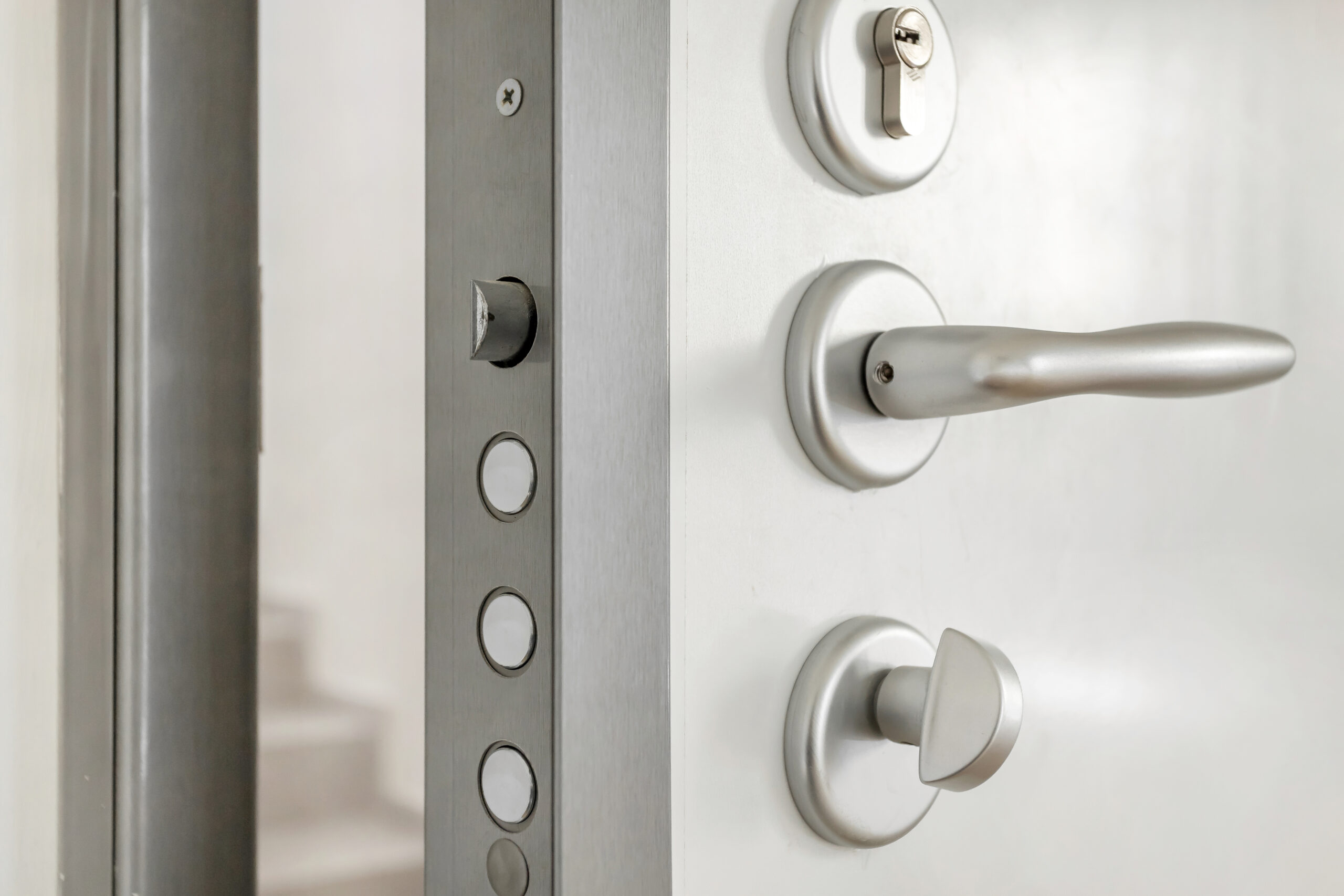
Secure steel doors can accommodate high-security locking hardware, multi-point locking systems, electric locking solutions, and access control technology, creating multiple layers of protection that are much harder to defeat.
As standard, our doors include a 9 to 12 point locking system, securing the door at multiple points. For the main opening and locking system a standard secure key lock is also included but there are some additional options.
Master Key Cylinder: Key lock with added features such as anti-drill, anti-pick, anti-snap, etc.
Exidor Single Point Crash Bar/ Push bar: A quick release bar for letting occupants escape a building in an emergency.
Exidor 2 Point Panic Bolt Bar: A Panic bar for emergency exits. Allows occupants to escape a building quickly but also has additional security thanks to vertical bolts that lock the door at the top and bottom.
External Locking Handle: Allows access through a fire exit door from the outside.
Smart Lock: Fits all doors and allows keyless entry via combination or smartphone app. Includes auto-locking feature for added security.
Hinges and Hardware
Steel security doors are fitted with heavy-duty hinges, reinforced fixings, security pins, and commercial-grade hardware designed to withstand years of continuous operation while resisting tampering.
These components play an important role in ensuring the door performs as a complete security system rather than simply acting as a barrier.
Comparing Security Doors and Standard Commercial Doors
| Feature | Standard Commercial Door | Security Door |
|---|---|---|
| Forced entry resistance | Basic | High |
| Steel construction | Standard | Reinforced heavy-duty steel |
| Frame strength | Standard frame | Reinforced security frame |
| Lock compatibility | Standard locks | High-security and access control systems |
| Resistance to tampering | Limited | Enhanced protection |
| Suitable for high-risk areas | Not always | Yes |
| Long-term durability | Moderate | Excellent |
Where Are Security Doors Used?
Security doors are used across a wide range of commercial sectors where protecting people, equipment, stock, or sensitive information is a priority.
Common applications include:
- Warehouses and distribution centers
- Manufacturing facilities
- Office buildings
- Schools and universities
- Healthcare facilities
- Government buildings
- Retail stores
- Data centers
- Utility buildings
- Critical infrastructure
In many of these environments, the cost of a break-in can extend far beyond stolen property, including operational downtime, damaged equipment, insurance claims, and risks to employee safety.
Why Businesses Choose Doors4Security Security Doors
While standard commercial doors are suitable for many everyday applications, businesses that require a higher level of protection often choose purpose-built secure steel doors that have been engineered specifically for demanding environments.
Doors4Security steel doors are designed to provide robust physical security while maintaining the professional appearance expected in commercial buildings. Built using heavy-duty steel construction and reinforced door assemblies, they are intended to provide dependable protection in facilities where security cannot be left to chance.
Many organizations also value the flexibility of being able to specify door configurations, glazing options, hardware, finishes, and access control compatibility to suit their operational requirements.
Whether securing an external entrance, protecting restricted areas, or strengthening vulnerable access points, a dedicated security door offers considerably greater protection than a conventional commercial door.
Is a Security Door Worth the Investment?
For many commercial properties, the answer is yes.
Replacing a damaged door after a break-in, dealing with stolen equipment, repairing property damage, or experiencing operational disruption can quickly become far more expensive than investing in the right security measures from the outset.
A high-quality security door provides long-term value through:
- Improved protection against unauthorized access
- Greater durability in high-traffic environments
- Reduced maintenance compared to lower-quality alternatives
- Compatibility with modern access control systems
- Increased confidence for employees, customers, and visitors
Choosing the Right Commercial Security Door
Not every business requires the same level of protection. The ideal security door will depend on factors such as the building’s location, the value of the assets being protected, foot traffic, access requirements, and any industry-specific security standards.
By selecting a professionally engineered security door system rather than relying on a standard commercial door, businesses can significantly improve the resilience of their premises against forced entry while investing in a solution built for years of reliable performance.
If you’re looking to upgrade your facility’s security, Doors4Security offers a range of commercial security doors designed to deliver strength, durability, and peace of mind for businesses across a wide variety of industries.